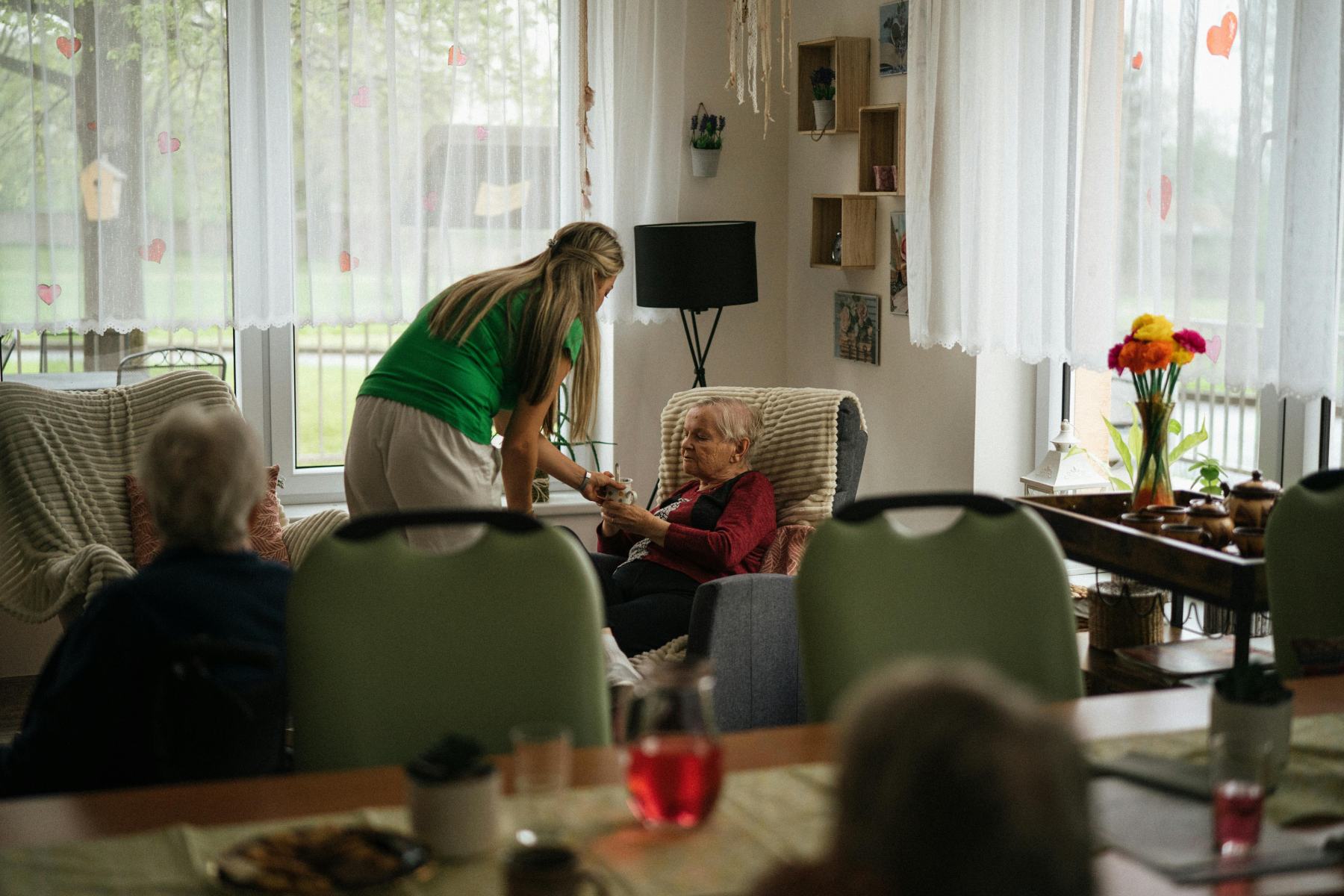


Explore when a care home may be the right next step, what support it can offer, and how it compares with care at home.
Residential setting
A dedicated environment with staff support, routines, and daily oversight.
Ongoing supervision
Useful when care needs are no longer limited to short visits or simple routines.
Clearer next step
Often explored when families are comparing home-based support against residential care.
What It Is
Residential settings for people who need ongoing support, supervision, and a care environment outside the home.
Care homes are residential settings for people who need more regular support, supervision, or day-to-day help than can easily be managed at home. They usually provide accommodation, staff support, meals, and structured routines in one environment.
Families often compare care homes with live-in care when needs are becoming more intensive and they need to decide what setup feels safest, most practical, and most sustainable.
Is This A Good Fit?
Families usually explore this route when these day-to-day needs, routines, or concerns start becoming part of the picture.
Needs have become too high or unpredictable for support at home.
Safety, supervision, or mobility concerns are growing.
Families need a structured care environment with ongoing staff support.
A person may benefit from a residential routine and communal setting.
Clear Benefits And Support
A clearer view of the practical benefits on one side, and the kind of support that often comes with care homes on the other.
The benefits that often make this route feel more manageable from the start.
Structured environment
Support, routines, and supervision are all built into one setting.
More day-to-day oversight
Helpful when needs are becoming too complex or unpredictable for ad hoc support.
Clearer long-term option
Useful for families who need a more established care environment.
The kinds of help families commonly look for when choosing this route.
Residential accommodation with staff support.
Daily help with personal care, meals, and routines.
Observation and reassurance in a care environment.
A more structured setup than ad hoc support at home.
Clear Trust Signals
Looking at a service page is often just the start. These are the trust signals many families want to see before moving closer to a shortlist.
Compare carers by postcode so the options you see feel relevant to the area where care is actually needed.
Families can check qualifications and supporting documents to feel more confident about experience and training.
Read how other families describe communication, reliability, and the way support felt in practice.
You can speak with the carer first, ask questions, and get a better sense of fit before confirming anything.
What Families Have Said
Feedback from families who wanted a clearer sense of how this type of support feels in practice before taking the next step.
What helped most was understanding when residential care made more sense than trying to patch together visits at home. The clarity mattered.
Priya Shah
Family decision-maker · Reading
How It Works
A simple step-by-step route to describe what you need, compare options, and move forward with more confidence.
Post your care job
Describe the care needed, location, schedule, and any specific requirements.
Browse & shortlist
Review carer profiles, qualifications, reviews, and hourly rates.
Interview & confirm
Chat directly with your preferred carer before making a decision.
Care begins
Agree on terms and start receiving care — all managed through the platform.
What happens after you click Find Your Carer?
You answer a few guided questions
We ask about the type of support, postcode, timing, and practical needs so the route feels more relevant from the start.
You see carers that match more closely
The next step is not a dead end. You move toward local profiles, reviews, qualifications, and clearer options to shortlist.
You decide who to contact
Once you feel confident, you can reach out, ask questions, and decide which carer feels like the best fit.
Ready to describe the support you need? Start with the questionnaire and we will guide you through the details step by step.
Find Your CarerCompare Other Routes
Some people start with one route, then realise another may fit their routine or level of support better. These are the pages families most often compare next.
Specialist support shaped around routine, familiarity, communication, and dignity.
Learn moreRound-the-clock support at home for people who need continuity, reassurance, and a familiar environment.
Learn moreFlexible support visits at home for routines, companionship, and practical day-to-day help.
Learn moreReady To Take The Next Step?
You can answer a few guided questions about timing, location, and the kind of support you want. From there, we help you move toward carers and care options that feel more relevant from the start.